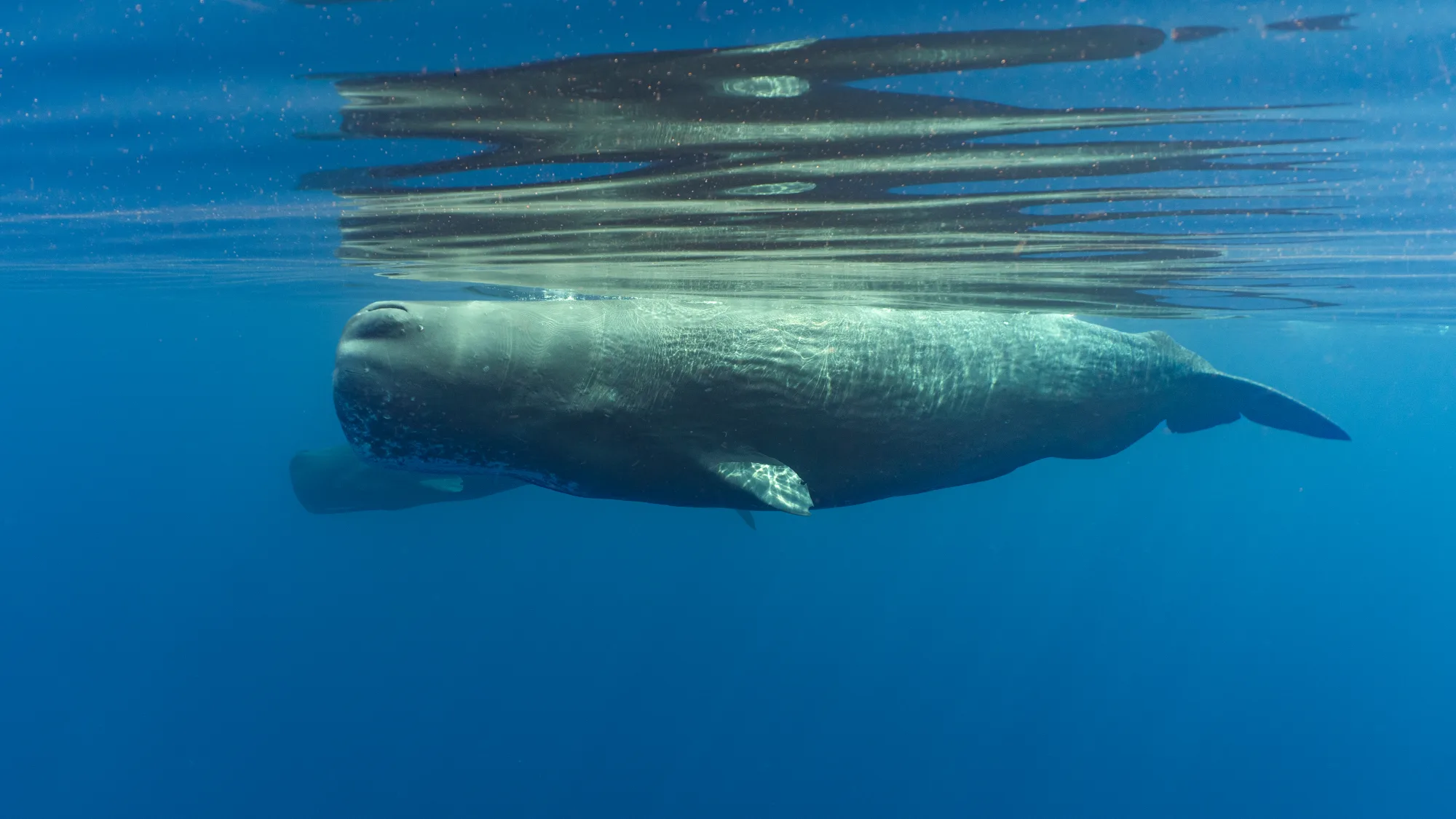
The Cetacean Highway.
One of only a handful of places on earth where pygmy blue whales pass close to shore. The Wetar Strait runs 3km deep right out the front, and cetaceans ride it between the Pacific and Indian Oceans every year.
Why Atauro is a whale destination.
The Wetar Strait — the channel between Atauro and the Indonesian island of Wetar — is 20 kilometres wide but plunges 3 kilometres deep. That depth, combined with the current running between the Pacific and Indian Oceans, makes it one of the most marine-mammal-dense corridors on the planet. Many of the world's cetacean species have been recorded transiting these waters, including pygmy blue whales, sperm whales, orca, and resident dolphin pods.
Between October and November, the pygmy blue migration peaks. On a good morning the boats don't have to go far — blows visible from the deck before you've finished your coffee. Timor-Leste is one of the very few places in the world where respectful swim-with encounters are possible, though operators book out fast and not every day yields one.
- Season: October to November (peak in November)
- Dolphins year-round; orca less frequently
- Small boats, small groups — we work only with licensed operators
- Peak-season bookings open two years ahead
- Full-day trips — about 7 hours, with snacks and lunch aboard
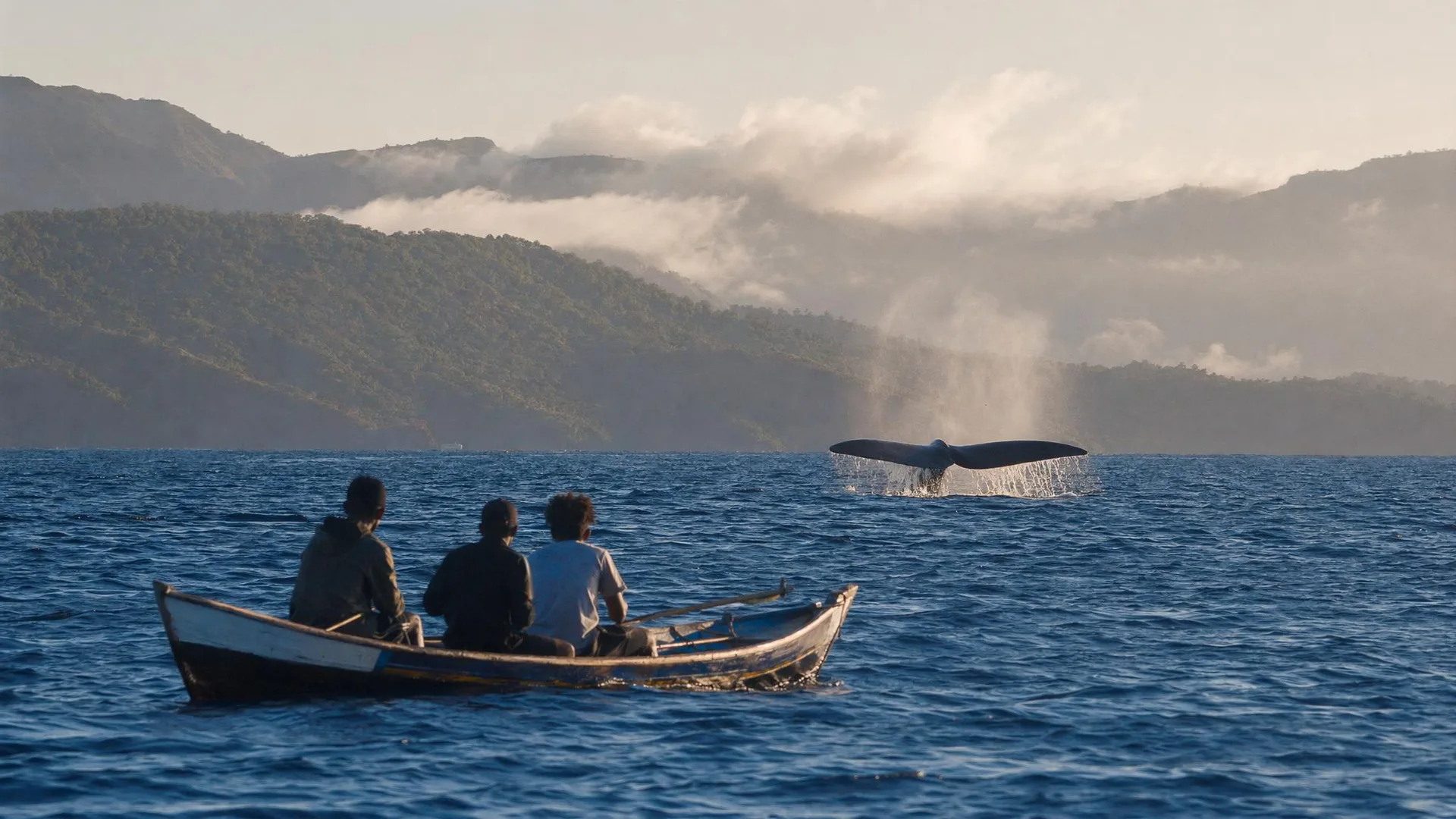
“Twenty kilometres wide. Three kilometres deep. The deepest channel in the Indo-Pacific runs right past us.”
What crosses the strait
Sightings vary day to day, but these are the regulars. Our crews log every encounter — Atauro contributes to one of the longest-running cetacean datasets in the region.
Pygmy blue whales
The headline act. The Indo-Pacific subspecies (<em>Balaenoptera musculus brevicauda</em>) migrates between the southern Indian Ocean and the Banda Sea — the strait is one of their narrowest pinch-points. Peak: October–November.
Resident dolphins
Spinner, spotted, and bottlenose dolphins year-round. Bow-rides on the boat ride out are routine. Pods of 50+ aren't unusual on a calm morning.
Orca & sperm whales
Both pass through, less predictably. Orca tend to follow schooling fish and squid; sperm whales hunt the strait's deep water. Lucky days, not booked days.
Mantas, marlin, and more
Above water you watch for blows; below it the strait runs a year-round megafauna parade — manta rays, mola, marlin, sailfish, schooling tuna. Snorkellers with sharp eyes get bonus sightings.
What a day on the water looks like
Coffee at 5:30. Light breakfast on the deck. Boat in the water by 6:15 — the strait is glass-flat at first light. Crew briefing covers the etiquette: no chasing, no closing engines on a sighting, distance kept on swim-with encounters.
Most mornings sightings happen within an hour of leaving the bay. Pods of dolphins on the bow ride; on a good day a pygmy blue blow on the horizon and a slow approach, and — when conditions allow — a chance to slip into the water with them. It's a full day on the strait, around seven hours, with snacks and lunch aboard; you're back by mid-afternoon.
Some days the strait gives nothing. We don't promise sightings — anyone who does is either lying or working with operators who don't deserve your money. What we promise is licensed crew, small groups, and a real shot.
Whale-season questions
October and November, peaking in November. Sightings outside this window happen but the migrating pygmy blues are the reason most people come — they pass during these months.
Peak November dates fill up to two years in advance. Earlier-October dates open up closer to the season. WhatsApp us with your travel window — we'll tell you what's still possible.
No, and we'd be wary of any operator who guarantees them. Sightings on a typical good day are very high; on a poor-weather morning they can be zero. Plan more than one boat day if whales are the priority.
Sometimes, depending on the species, weather, and the animals' behaviour. Timor-Leste is one of the few places where it's permitted under licence. Crews follow strict approach rules — no engine on the animals, no pursuit, swimmers only enter when conditions allow.
Sun protection (the strait reflects hard), a layer for the early morning, motion-sickness tabs if you're prone to it, a dry bag for camera gear, and binoculars if you have them. We provide water and snacks.
From around age 8, yes. Below that the early start, the boat motion, and the long quiet stretches between sightings tend not to land well. Talk to us if your group is mixed — there's plenty to do on the island for younger kids.